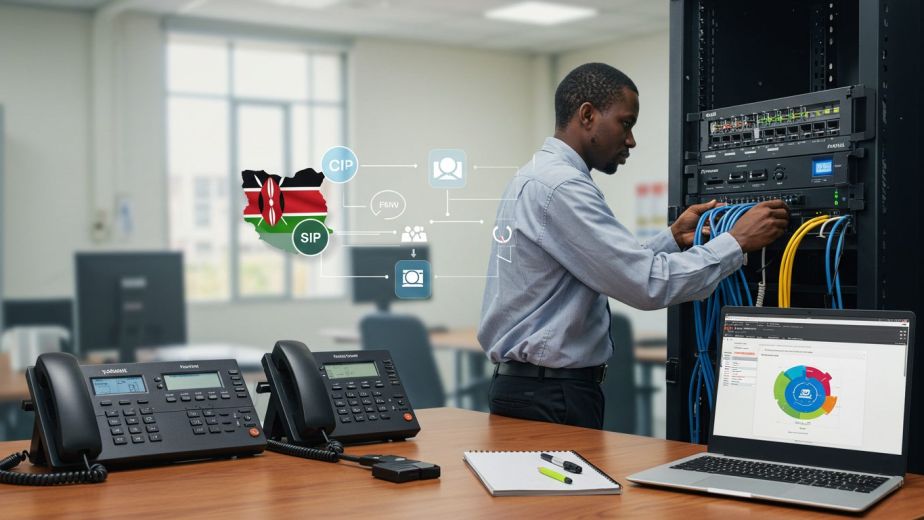
Deploying a modern yeastar ip pbx allows organisations to consolidate voice, video, and team collaboration into an agile, cost-effective infrastructure. As operational demands expand across branch offices and remote workforces, legacy telephone systems struggle to deliver unified features without ballooning recurring licensing fees. This guide provides an engineering-led overview of system architecture, deployment formats, legacy integration, and network security to help your organisation build a dependable communications stack.
Key takeaways
- The modern P-Series platform unifies voice, video, team chat, and call centre management under one roof.
- Organisations can choose between on-premise hardware appliances, virtualised software instances, or cloud hosting based on survivability and infrastructure needs.
- Native FXO, FXS, and PRI gateways allow legacy hospitality, healthcare, or warehouse equipment to operate smoothly alongside digital SIP trunks.
- Tiered licensing and concurrent-call options offer significant commercial savings compared to rigid per-user hosted UCaaS models.
- Proper network segmentation using voice VLANs, access control lists, and automated SIP defence protects against toll fraud and unauthorised access.
What Is a Yeastar IP PBX and How Does the P-Series Modernise Voice?
At its core, a yeastar ip pbx delivers full-featured IP telephony by routing calls over data networks using standard Session Initiation Protocol (SIP). While older generations of IP PBXs relied on basic call control mechanics, modern Yeastar business communications systems provide a complete unified communications platform. The flagship Yeastar P-Series modernises voice by integrating call handling, web-based video conferencing, team presence, and mobile collaboration into a single management interface.
Traditional phone systems forced businesses to maintain separate appliances for voicemail, audio conferencing bridges, and call recording storage. In contrast, the modern P-Series architecture coordinates these services dynamically. Operating on robust underlying Linux kernels, the system provides high-definition audio codecs such as Opus and G.722, which dynamically adjust bitrate to match available bandwidth. This architecture ensures crystal-clear voice transmission even during high-traffic periods across multi-branch operations.
Furthermore, the P-Series bridges the gap between deskbound staff and distributed teams. Administrators no longer need to configure complex port-forwarding rules or stand up separate third-party session controllers for external users. The platform uses secure proxy tunnelling to deliver seamless connectivity for remote softphones, streamlining communications across distributed workforces.

On-Premise vs Cloud PBX Yeastar: Evaluating Deployment Models
Selecting the right deployment model is the most critical decision when planning a yeastar ip pbx rollout. Organisations have distinct operational priorities, such as physical survivability during internet outages or the convenience of fully managed off-site hosting. The P-Series offers three core deployment formats to accommodate these operational differences.
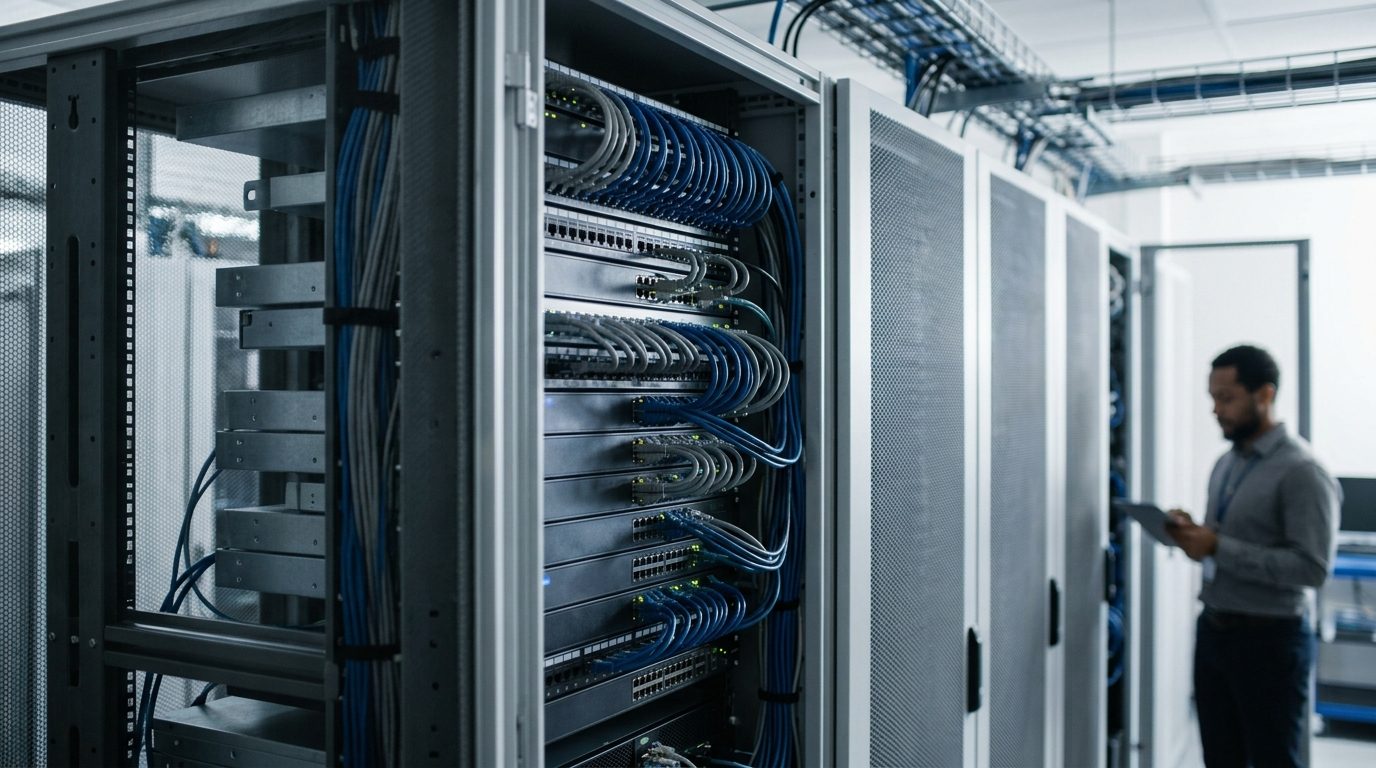
First, on-premise hardware appliances suit operations that require maximum physical survivability. These dedicated rack-mounted units include built-in telephony interfaces and keep all call routing local. If your external internet connection drops, internal extensions, emergency numbers, and local analogue lines remain fully functional.
Second, software PBX editions allow technical teams to run the PBX inside private hypervisors, such as VMware vSphere or Microsoft Hyper-V. This model provides rapid snapshot recovery, centralised backup orchestration, and elastic compute scaling without requiring proprietary hardware.
Third, turnkey cloud PBX deployments eliminate physical hardware maintenance entirely. The platform is hosted within a high-availability cloud data centre, making it ideal for distributed firms with minimal on-premise infrastructure. When deciding on on-premise vs cloud pbx yeastar architectures, consider your internet stability, regulatory data-residency mandates, and in-house technical resources.
| Deployment Model | Best Suited For | Resilience & Survivability | Infrastructure Responsibility |
|---|---|---|---|
| Hardware Appliance | Hotels, hospitals, remote sites, branch offices | High local survivability; operates during WAN outages | Physical device management and power backup |
| Software Edition | Enterprises with existing private server clusters | High resilience tied to hypervisor snapshots and failover | Virtual machine maintenance and OS monitoring |
| Cloud Hosting | Professional services, distributed remote teams | Carrier-grade uptime; reliant on WAN connection | Zero local maintenance; managed in the cloud |
Enterprise Features That Drive Operational Continuity
Modern enterprise voice platforms must deliver more than basic dial-tone functionality. The Yeastar platform includes operational tools designed to streamline daily customer interactions and internal collaboration.
A core pillar of the platform is the linkus uc client setup, which provides softphone interfaces for desktop, iOS, Android, and web browsers. Linkus transforms any laptop or mobile phone into a full enterprise extension. Employees can transfer calls, initiate ad-hoc video meetings, access shared corporate phonebooks, and manage voicemail-to-text notifications without revealing their private mobile numbers.
Customer service and sales teams benefit from built-in inbound call centre features. Rather than purchasing costly third-party contact centre add-ons, managers can configure intelligent automated call distribution (ACD) queues, real-time wallboards, and interactive voice response (IVR) menus. Team leads can monitor queue metrics, track average wait times, and use supervisor tools such as call listening, whispering, and barging to maintain service standards.
The system also integrates seamlessly with business productivity suites. Native synchronisation with telephony solutions and platforms such as Microsoft 365, Google Workspace, and leading CRM platforms enables screen-pop caller identification and automated click-to-dial functionality. These integrations eliminate manual dialling and log customer call history automatically.
Hybrid Architecture and Legacy Gateway Integration
Many enterprises cannot completely replace their physical wiring or legacy infrastructure overnight. In healthcare facilities, hospitality venues, and manufacturing plants, existing analogue guest room phones, door intercoms, public address speakers, and elevator emergency lines represent significant investments that must remain operational.
Connecting legacy endpoints to a modern yeastar ip pbx preserves existing wiring while upgrading the core routing engine. Through modular expansion boards and external VoIP gateways, Yeastar platforms bridge traditional analogue (FXS/FXO) and digital ISDN (PRI/E1) connections into modern SIP networks.
For instance, an analogue FXS gateway allows hundreds of standard two-wire telephone lines to register as native SIP extensions on the central PBX. Conversely, FXO or PRI gateways connect traditional telecommunication trunks to the system. This setup creates reliable fallback routing: if a primary optical fibre SIP trunk experiences downtime, outbound calls route automatically over legacy analogue lines.
Security Hardening and Network Best Practices for Yeastar Systems
VoIP systems are frequent targets for toll fraud, automated brute-force attacks, and SIP registration hijacking. Securing your yeastar ip pbx requires a layered defence model that combines network-level isolation with system-level hardening.
First, always segregate voice traffic from regular office data using dedicated Voice VLANs (Virtual Local Area Networks). Voice packets should be tagged with appropriate Quality of Service (QoS) values, such as DSCP 46 (Expedited Forwarding), to prevent latency and jitter during network congestion. Implement strict stateful firewall inspection through advanced cybersecurity solutions to limit SIP signalling access exclusively to authenticated IP ranges and authorised SIP trunks.
At the PBX level, apply these practical hardening measures:
- Enable TLS and SRTP: Encrypt SIP signalling traffic using Transport Layer Security (TLS) and protect call media streams with Secure Real-time Transport Protocol (SRTP) to stop eavesdropping.
- Configure Auto-Defense: Activate the built-in auto-defense firewall rules to block IP addresses that exceed failed authentication thresholds automatically.
- Enforce Strong Extension Credentials: Mandate complex 16-character alphanumeric passwords for SIP registrations and restrict remote extension registrations to specific geographic IP ranges.
- Disable Unused Trunk Features: Disable international dialling prefixes and premium-rate call routes on extensions that only require local or domestic calling privileges.
Adhering to security recommendations from vendor standards and technical groups like the Yeastar official portal ensures that the system retains full feature capability without introducing vulnerabilities into your wider network.
Total Cost of Ownership: Yeastar PBX Deployment Economics
Calculating the total cost of ownership for a yeastar ip pbx reveals distinct commercial advantages over conventional per-user hosted UCaaS platforms. Hosted subscription services typically charge a flat monthly fee for every single extension. For organisations with high headcount but moderate simultaneous call volumes—such as schools, distribution centres, and hospitality venues—this per-seat model quickly becomes cost-prohibitive.
In contrast, a structured yeastar pbx deployment decouples system extension capacity from concurrent call costs. Whether you manage 50 or 500 extensions, you only pay for the simultaneous trunk channels and system capacity you actually require. Licensing is organised around transparent annual tiers (such as Standard, Enterprise, and Ultimate packages) that unlock advanced UC tools, contact centre features, and video capabilities without per-seat penalty fees.
Furthermore, businesses maintain complete flexibility over their choice of SIP trunk providers. By negotiating competitive voice carriage rates with preferred regional carriers rather than accepting locked-in bundled carrier rates, organisations can reduce ongoing monthly operational telecommunication expenses substantially over a three-to-five-year deployment cycle.
Practical Yeastar IP PBX Rollout and Engineering Support
A successful voice migration requires thorough planning and systematic execution. The engineering team at Call Experts conducts an initial traffic audit to assess local network bandwidth, existing cabling infrastructure, and SIP trunk compatibility before configuring a single extension. This pre-deployment assessment prevents common post-migration issues such as one-way audio, dropped calls, or packet loss.
During deployment, certified engineers provision desktop IP hardware from vendors such as Yealink and Fanvil using centralised auto-provisioning templates. Call routes, ring groups, IVR branches, and backup failover rules are thoroughly tested in a staging environment prior to final cutover. Following cutover, staff receive clear onboarding to master the Linkus mobile and desktop applications smoothly.
Selecting the right yeastar ip pbx architecture establishes a foundation for dependable, scalable enterprise dialling. By pairing enterprise hardware with unified softphone mobility and intelligent routing, your business can modernise communications while protecting core operational budgets. To discuss your deployment requirements, review licensing models, or schedule an initial site assessment, visit our contact page to speak directly with our certified telephony specialists.
Frequently asked questions
Can I use my existing analogue phones with a Yeastar IP PBX?
Yes. Yeastar supports legacy analogue devices through modular FXS expansion cards and external VoIP gateways. This allows you to retain existing analogue telephone lines, fax machines, door intercoms, and public address systems while taking advantage of modern SIP routing on your primary network.
What is the difference between Yeastar P-Series appliances and software PBX?
P-Series hardware appliances are self-contained physical units with built-in hardware interfaces for direct trunk connectivity, making them ideal for high local survivability. The software edition runs as a virtual machine on VMware or Hyper-V, offering elastic compute scaling and simplified backup snapshots without dedicated hardware.
Does the Linkus UC app require open firewall ports for remote users?
No. When using the Yeastar Remote Access Service, Linkus mobile and desktop clients connect back to the PBX via a secure, encrypted proxy tunnel. This architecture eliminates the need to configure vulnerable public port forwarding or complex external firewall rules.
How does a Yeastar IP PBX handle internet connectivity failures?
On-premise hardware appliances maintain internal extension dialling during internet outages. If equipped with analogue FXO or digital PRI gateway modules, the PBX automatically fails over outbound voice traffic to traditional public telephone circuits whenever the primary SIP trunk goes offline.